
Laparoscopic One Anastomosis Gastric Bypass
The procedure

The one anastomosis gastric bypass (OAGB) is a bariatric (metabolic/weight-loss) surgery where a long narrow stomach pouch is created and connected directly to a loop of small intestine 1.5-2metres downstream. This allows food to “bypass absorption” from this portion of small intestine and mix with the digestive fluids in a shorter common channel where absorption of nutrients occur. It is also known as the mini gastric bypass or the omega loop bypass
- Performed under general anaesthesia
- Usually takes 1–2 hours
- Hospital stay: typically 1–2 nights
- Recovery: most patients return to normal activities within 2–4 weeks
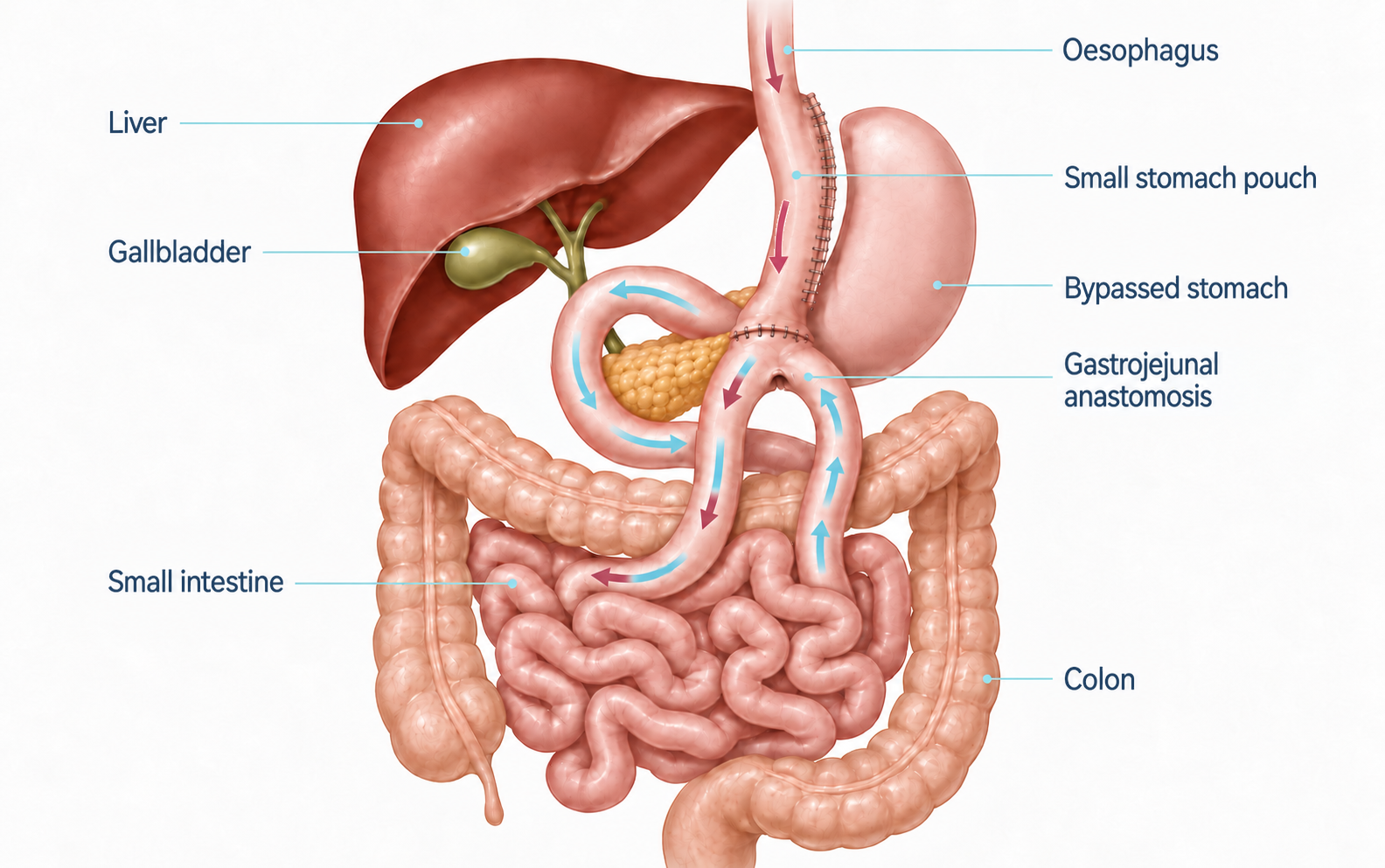
How it works
The small gastric pouch has a limited capacity for food and as it bypasses a significant length of small intestine fewer calories and nutrients are absorbed. This alteration in food absorption has significant hormonal effects which changes the gut hormone signalling producing early satiety and reducing hunger
Advantages
- Effective weight loss
- Strong metabolic benefits with high rates of type 2 diabetes remission
- Minimal risk of internal hernia compared to Roux-en-Y bypass
Disadvantages
- Bile reflux as bile and digestive juices can flow back into the stomach pouch and oesophagus causing reflux symptoms
- Higher malabsorption-related risks
- Nutritional deficiencies such as iron, B12, calcium, fat-soluble vitamins A/D/E/K
- Protein-calorie malnutrition
- Requires lifelong monitoring and supplementation
- Marginal ulcers can occur at the connection site, particularly with smoking, NSAID use or inadequate acid-suppression therapy
Long-term follow-up
Lifelong monitoring is essential including regular visits with the bariatric team, nutritional bloodwork and prompt evaluation of any reflux, abdominal pain or nutritional symptoms