
Acid Reflux, Hiatus Hernia and Laparoscopic Hiatus Hernia Repair with Fundoplication
Acid Reflux (GORD)

Gastro-oesophageal reflux disease (GORD) occurs when stomach acid flows back up into the oesophagus. This happens when the valve between the oesophagus and stomach (lower oesophageal sphincter) does not close properly
Typical symptoms
- Heartburn: a burning sensation rising from the upper abdomen and/or lower chest towards the throat
- Often associated with a sour or bitter taste in the mouth
- Regurgitation of food or fluid particularly when lying down or bending over
- Discomfort worsened by large meals, lying flat or certain foods (fatty, spicy, caffeine, alcohol)
- Chronic cough or voice hoarseness
Initial management
- Lifestyle changes: weight loss, smaller meals, avoiding food close to bedtime, raising the head of the bed/extra pillows to sleep
- Reducing or avoiding trigger foods and drinks
- Medications that reduce stomach acid such as proton pump inhibitors (PPIs)
Most people are managed successfully with lifestyle changes and medication. Surgery is generally considered when symptoms persist despite medication; when medication is not tolerated or not wanted long-term or when there are other clinical factors such as a large hiatus hernia. Further investigations such as gastroscopy, barium swallow and oesophageal functioning tests including pH monitoring & manometry are typically performed
Hiatus Hernia
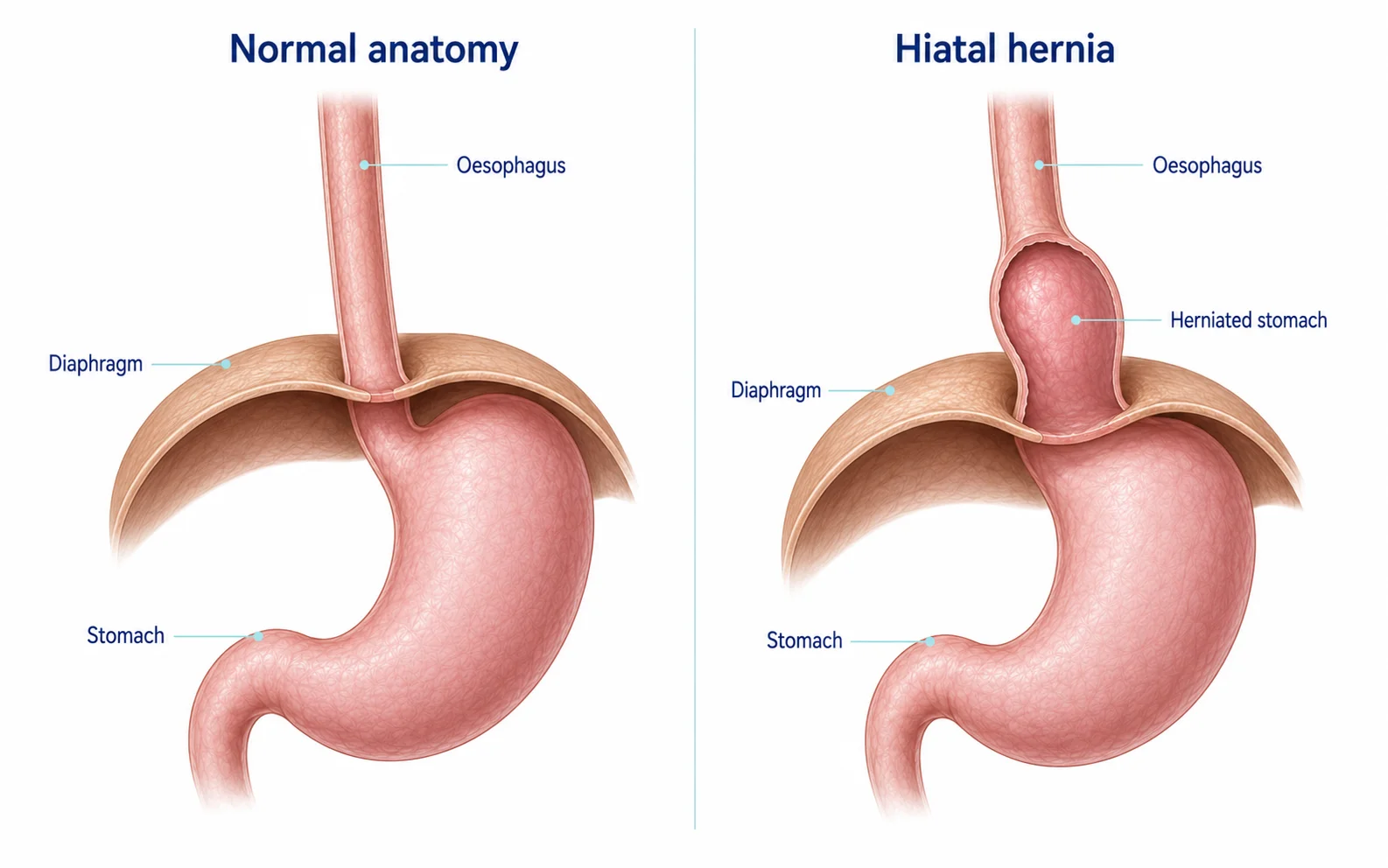
A hiatus hernia occurs when part of the stomach pushes up through the diaphragm (the muscle separating the chest and abdomen) into the chest cavity through an opening called the hiatus. This weakens one of the natural barriers to gastric reflux and is a common underlying cause of GORD
Symptoms
- Similar to acid reflux: heartburn, regurgitation and upper abdominal/central chest discomfort
- Sometimes difficulty swallowing or pain after eating
- Larger hernias can occasionally cause breathlessness or symptoms after meals due to pressure on the chest
A hiatus hernia is usually investigated with a gastroscopy barium swallow and oesophageal functional tests
Seek urgent medical care if you experience:
- Severe chest pain especially with breathlessness or sweating
- Sudden severe abdominal or chest pain with vomiting (possible strangulated hernia/gastric volvulus)
- Difficulty swallowing that is severe or rapidly worsening
- Vomiting blood or passing black, tarry stools
Laparoscopic Hiatus Hernia Repair and Fundoplication
This minimally invasive (keyhole) operation repairs the diaphragm opening and restores the valve mechanism between the oesophagus and stomach
How the procedure works
- Performed under general anaesthetic
- 5 small incisions (around 0.5–1 cm each) are made in the upper abdomen
- The stomach is gently repositioned below the diaphragm and the widened hiatus opening is stitched to a normal size
- The top of the stomach (fundus) is wrapped around the lower oesophagus (fundoplication) to recreate a one-way valve that allows food down but limits acid flowing back up
- Typically takes 1–3 hours
Recovery
- Most people stay in hospital for 1–2 nights
- A fluid diet is recommended for the first 1–2 weeks with a puree diet for weeks 3 & 4
- Eating more slowly and in smaller portions is recommended
- Most people return to normal activities within 2–3 weeks
- Heavy lifting is usually avoided for 4–6 weeks