
Laparoscopic Roux-en-Y Gastric Bypass
The procedure

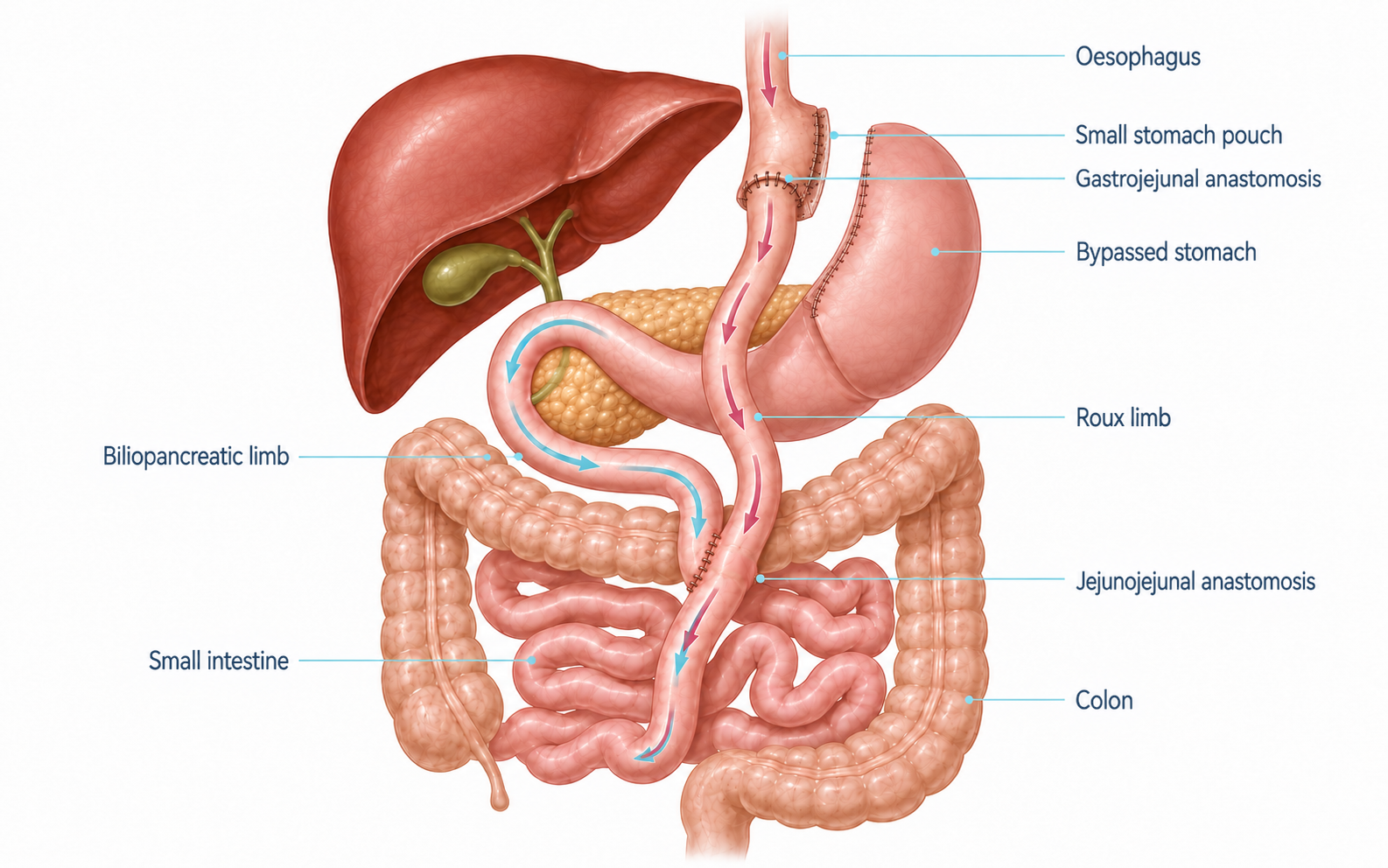
Roux-en-Y gastric bypass (RYGB) is a common form of bariatric (metabolic/weight-loss) surgery which changes the way the stomach and intestines process food allowing patients to feel full more quickly and absorb fewer calories
The surgery proceeds in three stages. First, the size of the stomach is reduced & refashioned, leaving only a small pouch with a capacity of ~100ml. This pouch becomes the patient's new stomach. The small intestine is then divided and a lower segment of it is connected directly to this new pouch, bypassing the remaining original stomach along with a portion of small intestine. Finally the bypassed section of intestine is reconnected further downstream allowing digestive juices from the stomach, liver and pancreas to still mix with food, just later in the digestive process
Once complete, the rerouted intestine forms the shape of the letter "Y" which is the origin of the procedure's name
- Performed under general anaesthesia
- Usually takes 1–2 hours
- Hospital stay: typically 1–2 nights
- Recovery: most patients return to normal activities within 2–4 weeks
How it works
The smaller gastric pouch limits the amount of food that can be eaten producing early satiety while bypassing a significant length of small intestine reduces the absorption of calories and nutrients. This altered absorption also triggers hormonal changes affecting gut hormone signalling in ways that reduce hunger and improve blood sugar control. This is one reason many patients see improvement in type 2 diabetes soon after surgery often before major weight loss occurs
Advantages
- Produces substantial and durable weight loss
- Rapid improvement or remission of obesity-related conditions such as type 2 diabetes, high blood pressure, high cholesterol and fatty liver disease
- Strong long-term evidence base being one of the most widely studied bariatric procedures
Disadvantages
- Higher risk of malabsorption-related nutritional deficiencies
- Protein-calorie malnutrition
- Nutritional deficiencies such as iron, B12, calcium, fat-soluble vitamins A/D/E/K
- Requires lifelong vitamin and mineral supplementation
- Risk of dumping syndrome after eating high sugar or high fat foods
- Risk of internal hernia and marginal ulcers due to the altered anatomy
- Technically more complex than a sleeve gastrectomy or one anastomosis gastric bypass
Long-term follow-up
Lifelong monitoring is essential including regular visits with the bariatric team, routine nutritional bloodwork and prompt evaluation of any reflux, abdominal pain or nutritional symptoms that arise