
Laparoscopic Sleeve Gastrectomy
The procedure

Laparoscopic sleeve gastrectomy (LSG) is a bariatric (metabolic/weight-loss) surgery in which approximately 75–80% of the stomach is surgically removed, leaving a narrow banana-shaped "sleeve" or tube in its place. It's performed using minimally invasive techniques with small incisions and a camera rather than a large open incision
- Performed under general anaesthesia
- Usually takes 1–2 hours
- Hospital stay: typically 1–2 nights
- Recovery: most patients return to normal activities within 2–4 weeks
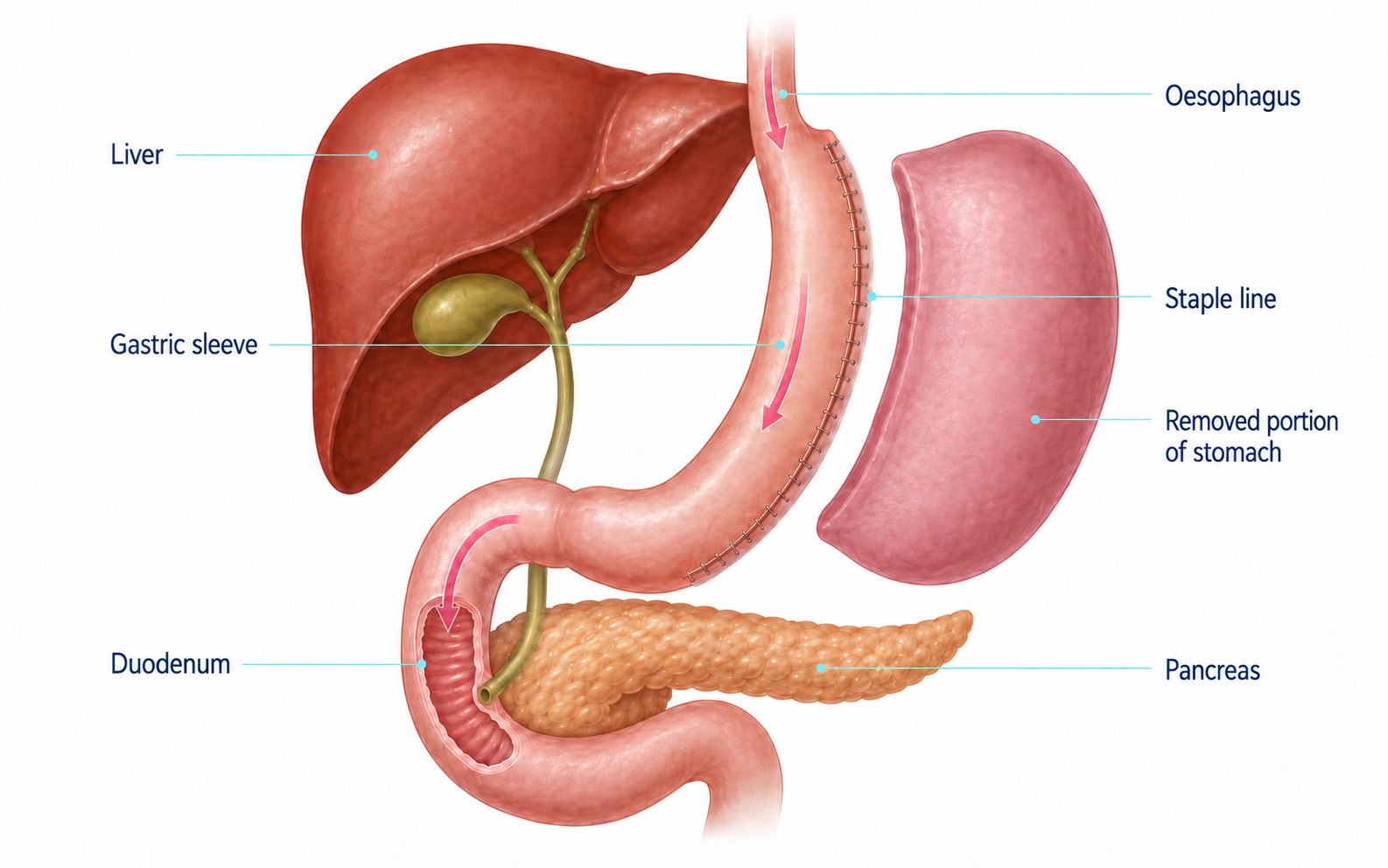
How it works
The smaller stomach holds much less food so patients feel full after eating small portions. It also has a complex hormonal effect which results in changes in glucose metabolism, hunger and satiety
Advantages
- Shorter operative time and generally a more straightforward recovery
- Effective durable weight loss with significant improvement in obesity-related conditions for most patients
- Preserves normal food passage through the stomach and duodenum which may be relevant for future medical procedures (eg ERCP)
- Less malabsorption of macronutrients (protein, fat, carbohydrate) compared to a bypass procedure
Disadvantages
- Not reversible: the removed portion of the stomach cannot be replaced
- New or worsened acid reflux/GORD can occur
- Nutritional deficiencies can still occur (vitamin B12, iron, vitamin D, calcium, thiamine) due to reduced intake
- Requires lifelong monitoring and supplementation
Long-term follow-up
Ongoing monitoring is recommended including regular check-ins with the surgical/bariatric team, nutritional bloodwork and support for sustainable lifestyle changes since long-term success depends on more than the operation itself